
How to Start Working Out Again After Years Off
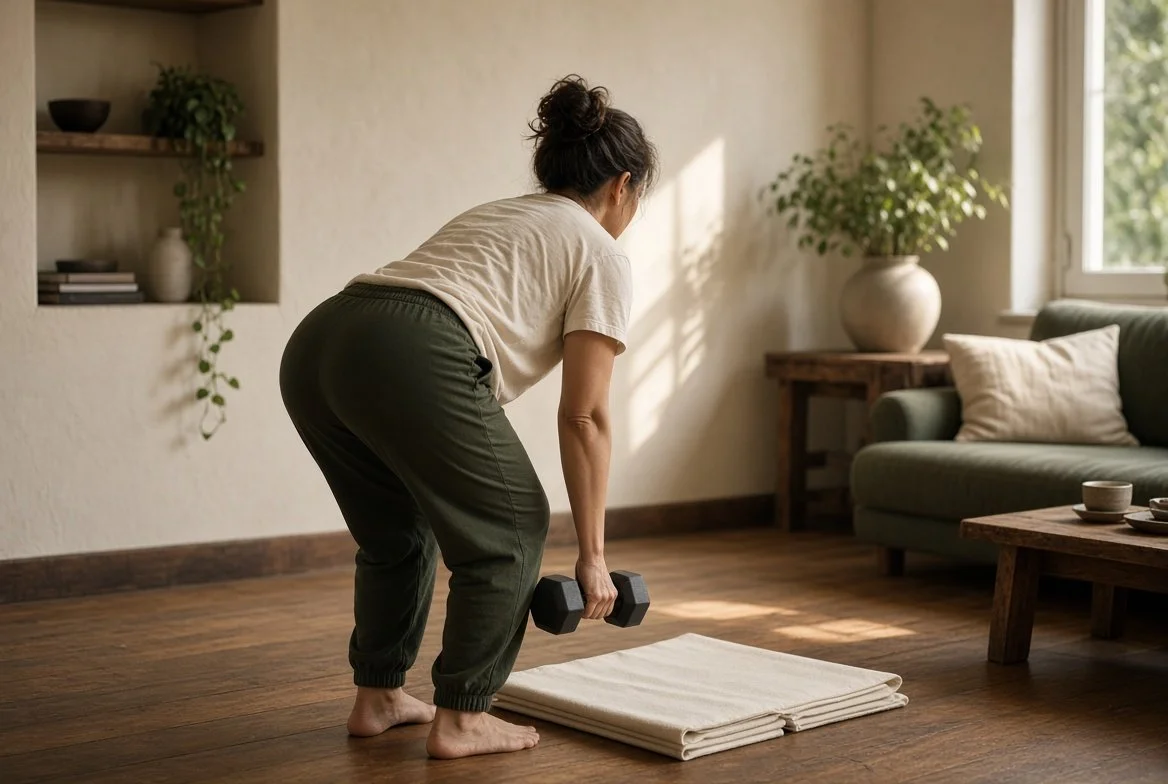
There’s a strange place you end up when you used to work out but haven’t in years. You don’t really feel like a beginner because you know how to exercise. You remember what a squat is, you’ve owned dumbbells before, and you probably don’t need anyone to explain why exercise is good for you. But knowing how to work out and currently being conditioned to work out are two very different things.
That’s where I am right now. I remember being stronger, and I remember what it felt like when working out was just a normal part of my life. The hard part isn’t learning how to exercise. It’s figuring out how to start again without immediately comparing everything I can do now to what I could do years ago.
If you’re in the same place, I don’t think you need to completely reinvent your life. You need to figure out where your body is now, give it enough work to start adapting, and resist the urge to do everything at once.
Start with the body you have now
One of the hardest parts about returning to exercise is that your brain remembers your old fitness level much better than your muscles do. If you used to lift heavier dumbbells, run several miles, or knock out five workouts a week, that becomes the standard you automatically compare yourself to.
The problem is that your old workout isn’t a particularly useful starting point anymore. You may remember exactly what you used to do, but your muscles, joints, and cardiovascular fitness haven’t been maintaining that workload while you’ve been away. You need to find out what you can comfortably do now and build from there.
That probably means your first few workouts should feel easier than you think they should. Use lighter dumbbells, take longer rests, do fewer rounds, and use modified versions of exercises when you need them. If you finish your first workout thinking you probably could’ve done a little more, that’s actually a pretty good place to be.
You can always make the next workout harder. What you don’t want is to get excited on Monday, do way too much, and spend the rest of the week so sore that you can’t do the workouts you planned.
Some soreness is normal when you start using muscles you haven’t challenged in a while, but being extremely sore isn’t proof that you had a better workout. I’d rather finish knowing I challenged myself and be ready to exercise again in a couple of days.
Start with three full-body workouts
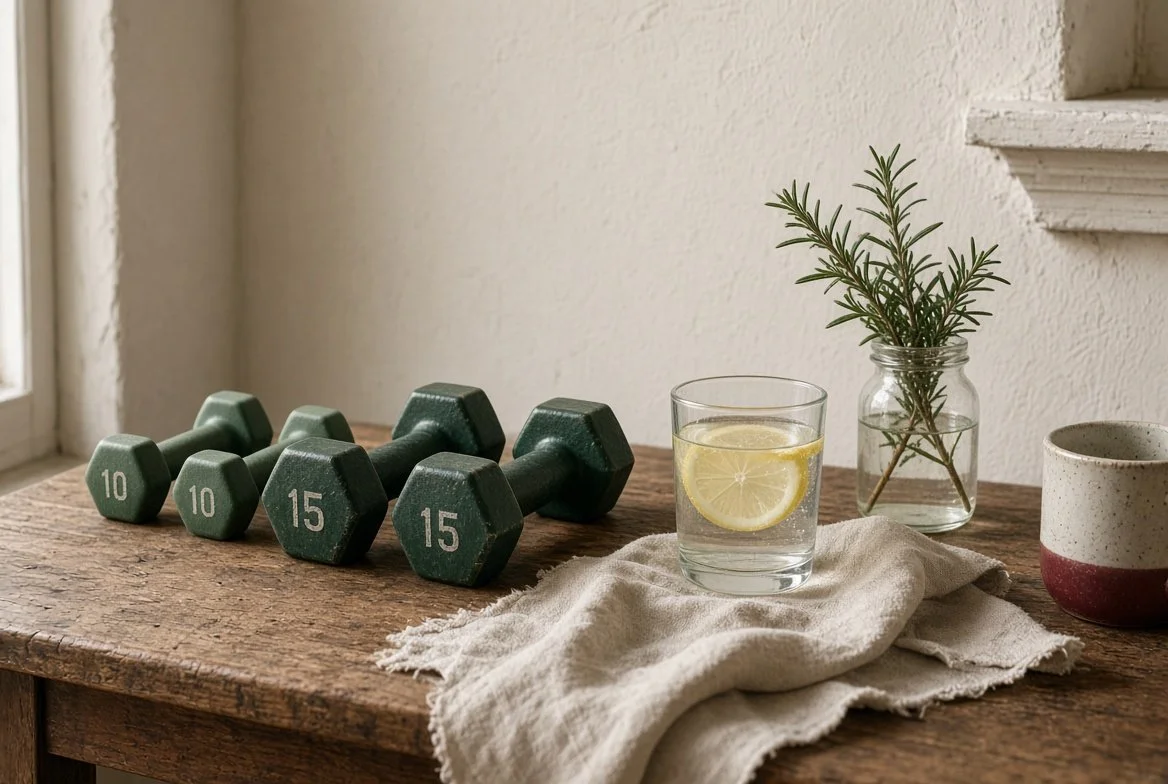
You also don’t need to jump straight into a five-day workout split just because that’s what you used to do. Three full-body strength workouts are a really good place to start because you can work all of your major muscle groups while still giving yourself plenty of time to recover.
Your first week could be as simple as working out Monday, Wednesday, and Friday, with rest or walking on the days between. The actual days don’t matter. If Tuesday, Thursday, and Saturday work better for your life, use those. The important part is that you’re giving yourself some recovery time instead of jumping from doing nothing to training hard every day.
The workouts themselves don’t have to be complicated either. Squats, hinges, rows, presses, lunges, glute work, and some basic core exercises will cover a lot. Goblet squats, Romanian deadlifts, dumbbell rows, floor presses, overhead presses, glute bridges, reverse lunges, and dead bugs aren’t particularly exciting exercises, but they’re easy to repeat and progress as you get stronger.
That’s something I care about more now than constantly changing my workouts. I want to be able to look back a month from now and see that the dumbbell I was using for squats has gotten heavier or that an exercise that was difficult for eight reps is now manageable for ten. I want to know that I’m actually getting stronger.
Choose weights you can control
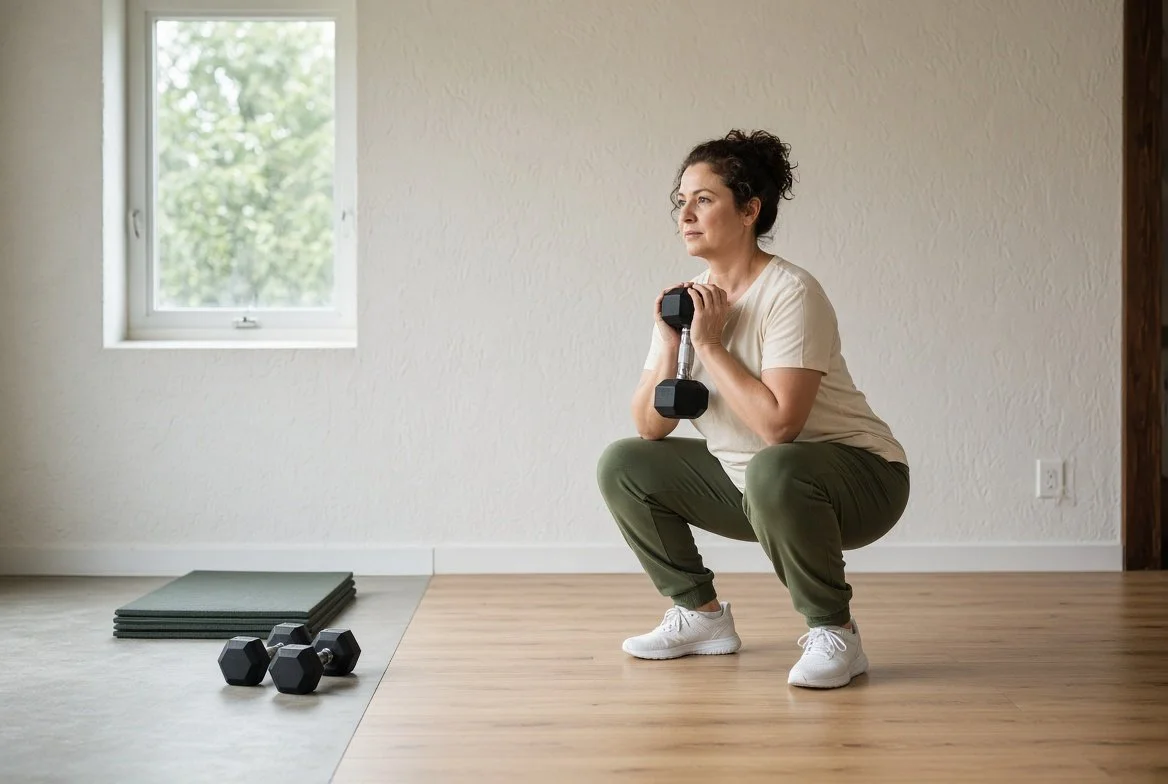
Figuring out what dumbbells to use is probably going to take some trial and error, especially if you remember what you used to lift. For now, forget the old numbers and pay attention to what happens during the set.
The weight should be heavy enough that the last few repetitions take some effort, but you should still be able to control the movement. If you finish ten reps and feel like you could immediately do another fifteen, you can probably go heavier. If your form starts falling apart halfway through the set, go lighter.
You’ll probably need different weights for different exercises too. Your legs can handle a lot more weight than your shoulders, and you may progress much faster on some exercises than others. There’s no reason to force everything to move at the same pace.
Once a weight starts feeling consistently easy with good form, that’s when you can increase it. You don’t have to add weight every workout. You can add a couple of reps, another round, or a slightly heavier dumbbell and give your body time to adjust before you increase something again.

Let walking be enough cardio for now
When I start thinking about getting fit again, it’s very easy for my brain to turn it into an entire project. Now I’m lifting weights, but apparently I also need a cardio program, a daily step goal, and maybe I should start running again while I’m at it.
You really don’t have to do all of that at once.
Walking works really well alongside strength training because it gets you moving without adding another hard workout you have to recover from. Walk around your neighborhood, take the dog out, wander around your garden, walk somewhere pretty, or put on a podcast and get outside for half an hour. It doesn’t need to become another performance metric.
There may be a time when you want to add running, harder conditioning, or some other type of cardio. You can do that when you’re ready. If your biggest goal right now is simply getting back into the habit of exercising, strength training and regular walking give you plenty to work with.

Don’t start a completely new diet on Monday either
Exercise seems to have this strange ability to bring every other health goal along with it. You decide you’re going to start working out again, and suddenly you’re supposed to meal prep, track calories, drink a gallon of water, hit a protein target, give up dessert, and develop strong feelings about cottage cheese.
That’s a lot to change at the same time.
I do think food matters, especially if your goals include losing fat, building muscle, or changing your body composition. But I don’t think getting back into fitness requires switching your entire household over to “diet food.”
I’d rather start by making normal meals work better. Get a good source of protein into your meals, eat fruits and vegetables, keep eating carbohydrates, pay attention to portions, and drink enough water. Pasta, potatoes, sauces, pizza, and dinner with your family don’t suddenly become incompatible with being fit.
I also prefer to get as much nutrition as I reasonably can from actual food instead of immediately buying powders and supplements because I started working out. I’m interested in herbs and the ways they can realistically fit into food, recovery, and general wellness too, but I don’t need every food or plant to become a fitness hack. The basics are still going to do most of the work.
Pay attention to how you recover
One of the best ways to decide whether you’re doing the right amount is to stop judging your workout only by how you feel while you’re doing it. Pay attention to what happens over the next day or two.
A little muscle soreness is one thing. Being so sore that normal movement is difficult, having sharp pain, or still feeling completely wiped out when your next workout comes around is different. If you’re recovering pretty well, you can gradually start asking more from yourself. If you’re not, doing even more probably isn’t the answer.
This is where progress can start to happen without turning your routine upside down every few weeks. Maybe you use a slightly heavier dumbbell. Maybe you do ten reps instead of eight. Maybe you eventually add another set. Small increases give your body a reason to adapt, and over time those small increases add up to being noticeably stronger.
Recovery also means accepting that sometimes your schedule isn’t going to go according to plan. If Wednesday was supposed to be a workout day and life happened, you didn’t ruin your week. Work out Thursday or move things around and keep going.
You don’t need to restart next Monday, squeeze two workouts into one day, or punish yourself with extra cardio. I think a much more useful definition of consistency is not that you never miss a workout, but that you keep coming back when you do.

Give yourself a few weeks before deciding what your routine should become
You don’t need to figure out the workout routine you’re going to follow for the rest of your life before you do your first squat. Your first few weeks can simply be about learning what works now.
Maybe three workouts fit perfectly into your schedule. Maybe you discover that you hate working out after work but don’t mind doing it in the morning. Maybe the dumbbells you thought would be too light are exactly what you need right now. Maybe you recover much faster than you expected.
You won’t know any of that until you start.
That’s really what I want this stage of getting back into fitness to be about. I’m not trying to prove that I can still do everything I used to do. I want to become stronger than I am now and build a routine that eventually feels normal enough that I’m not constantly trying to “get back on track.”
There’s plenty of time to work harder. There’s plenty of time to increase the weights, change your body, set bigger goals, and see what you’re capable of.
For now, start where you are.
Start with three workouts
If you’ve been away from exercise for a while and want someone else to take the guesswork out of your first week, I made Get Moving: Your First Week Back for exactly that.
It’s a free one-week plan with three full-body dumbbell workouts and recovery days between them. The goal isn’t to destroy yourself in your first week back. It’s to pick up the weights, find your current starting point, and finish all three workouts feeling ready to keep going.
[GET THE FREE 3-WORKOUT PLAN →]
Start where you are. Build from there.